


Membranes for RO systems
The membrane forms the heart of every reverse osmosis installation and determines the quality, capacity, and lifespan of the system.
The membrane is one of the most important components of a reverse osmosis installation. This component ensures that unwanted substances are removed from the water and largely determines the quality of the produced demi water.
Although there are many technical specifications, two properties are particularly important: the capacity of the membrane and the rejection, also known as reduction.
Important properties
- Capacity: how much water the membrane can produce per 24 hours.
- Rejection: how many unwanted substances the membrane removes from the water.
A well-functioning membrane ensures a low TDS value, reliable production and a constant water quality.
Examples of membrane types
Various membrane types are used within our RO systems. The choice depends on the desired capacity and the type of installation.

Type 4021
Standardly applied in the RO 800 Industrial.
Capacity:
3,600 liters per 24 hours
Reduction:
99.2%
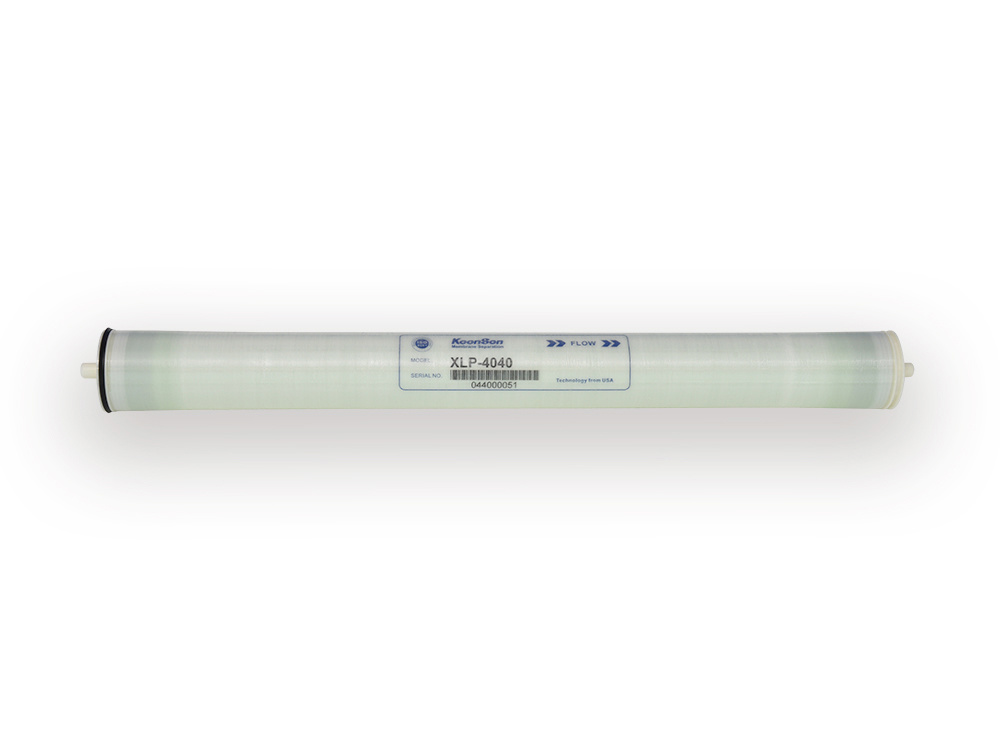
Type 4040
Standardly applied in the RO 1500 Industrial.
Capacity:
5,500 liters per 24 hours
Reduction:
99.2%
View all membranes
View our complete overview of filters and membranes for reverse osmosis systems.
View membranesWhat does TDS mean?
TDS stands for Total Dissolved Solids, or the total amount of dissolved substances in water. This includes minerals, salts, metals, and other dissolved substances. The TDS value is measured in ppm or mg/l. The lower the TDS value after filtration, the cleaner the produced water.
Membrane fouling
A common problem with RO systems is that the production of demi water decreases over time. This is often caused by fouling or clogging of the membrane.
Some users try to reduce the amount of wastewater by restricting it. This makes it appear as if the production of demi water increases, but this has a significant disadvantage.
Too little wastewater causes dirt to accumulate faster in the membrane. As a result, the membrane fouls more quickly, performance decreases, and the lifespan becomes shorter.
How do you recognize a fouled membrane?
- The system produces almost exclusively wastewater.
- The sight glass for the demi water no longer rises.
- The mix button no longer responds correctly.
- The production of demi water decreases significantly.
In many cases, this means that the pores of the membrane have become clogged by accumulated dirt.
Important for the lifespan of the membrane
For optimal operation, an RO 800 Industrial may produce a maximum of 125 liters of demi water per hour. This equates to approximately 2.1 liters per minute on the sight glass.
When the production is set higher, the membrane is overloaded. Dirt can then accumulate faster, causing the membrane to foul more quickly, performance to decrease, and the lifespan to become shorter.
Therefore, always maintain the correct setting. A good balance between demi water and wastewater is essential for optimal operation and a long lifespan of the membrane.